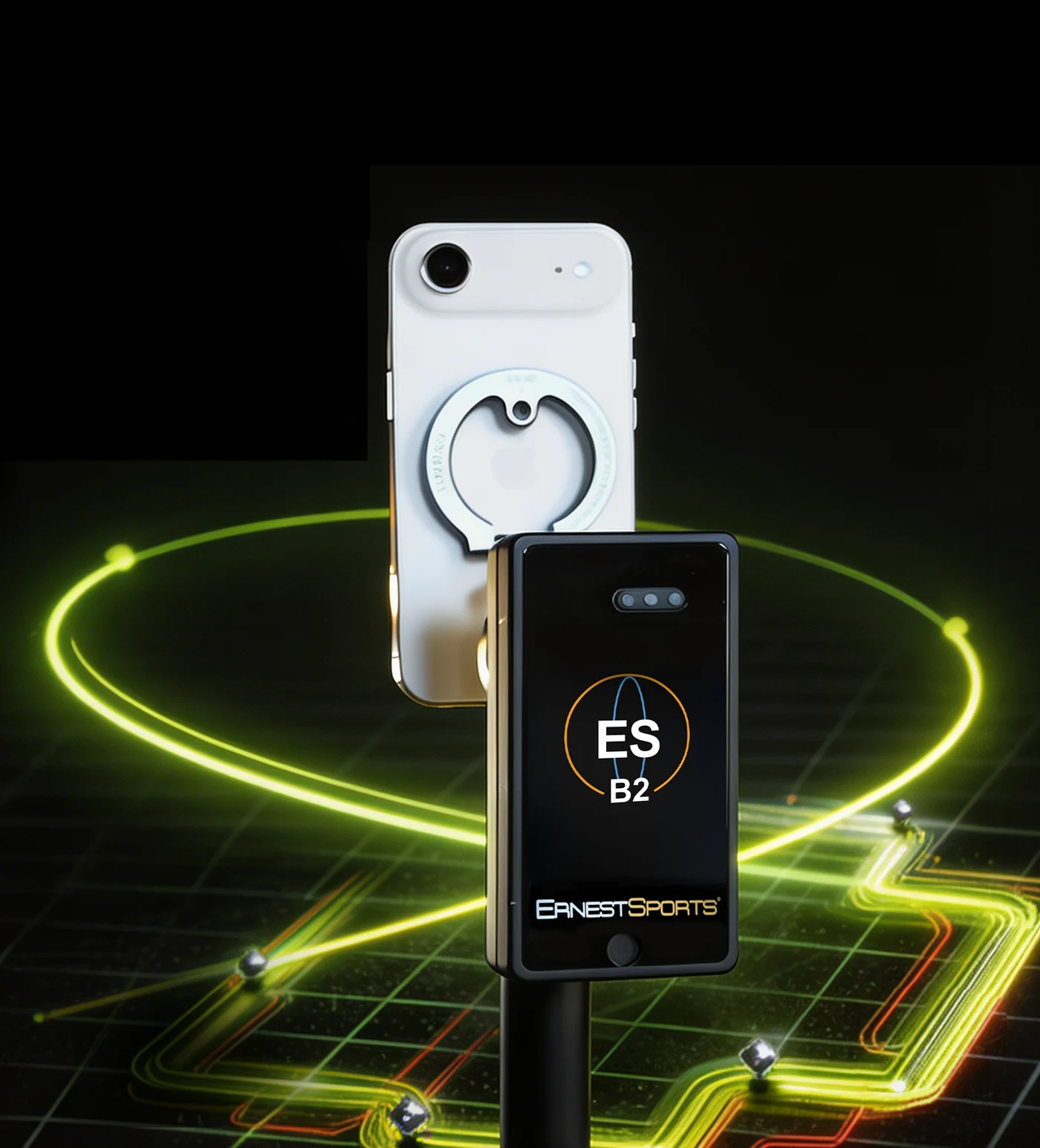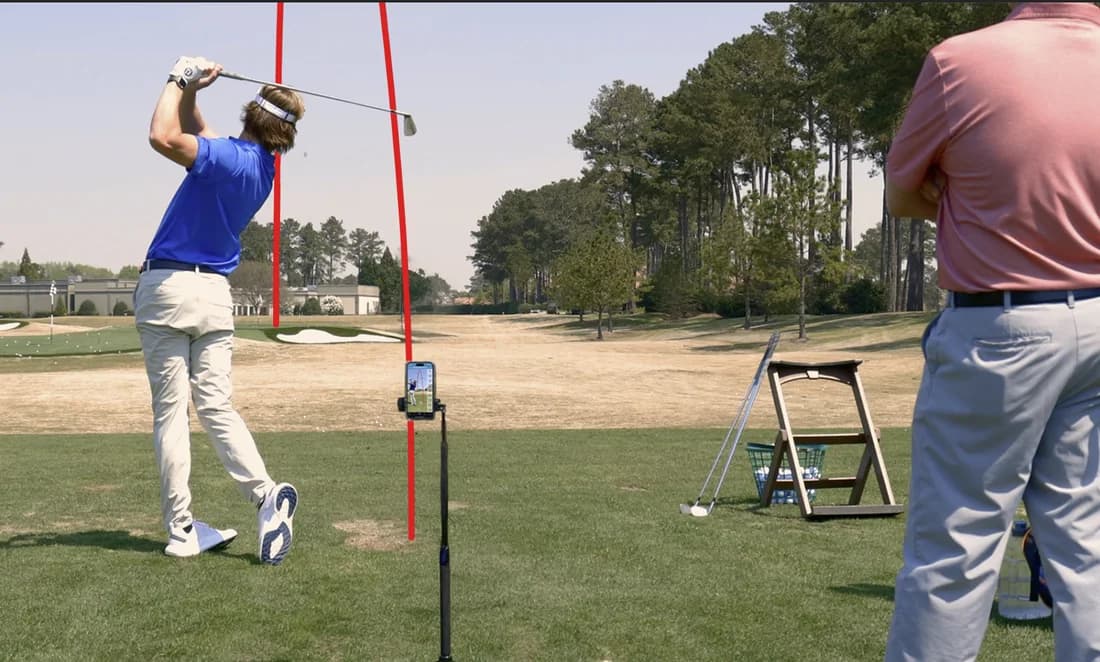
For most golfers under $500 the decision comes down to whether you want numbers on the device itself or on your phone. The ESB1 at $275 shows six metrics on a built-in screen and runs 20 hours on a charge. The ESB2 at $495 adds club path, face angle, apex and descent angle. Garmin’s R10 and Rapsodo’s MLM both sit near $500 and lean on a phone for display.
What actually matters under $500
Below roughly $500 you are buying a Doppler radar unit, not a camera-and-radar system. That single fact sets the boundaries. Radar reads the ball after it leaves the face, so it infers club data rather than photographing it, and it needs room behind the ball to work.
Three things separate the good units from the frustrating ones at this price:
- Does it need a phone? A built-in screen means you can hit balls without setting up a tripod, launching an app, and pairing over Bluetooth every session.
- How much space does it need? Most sub-$500 radar units want four to six feet behind the ball. In a garage bay that is the difference between usable and useless.
- Which metrics are measured versus modelled? Ball speed and launch angle are directly measured by nearly everything in this tier. Spin rate is where units diverge, and spin drives carry distance more than most golfers expect.
The four units compared
| ESB1 | ESB2 | Garmin R10 | Rapsodo MLM | |
|---|---|---|---|---|
| Price | $275 | $495 | $499 | $499 |
| Metrics | 6 | 10 | 14+ | 5 |
| Built-in screen | Yes | Yes | No | No |
| Battery | 20 hours | 20 hours | Up to 10 hours | About 4 hours |
| Shot tracer video | No | No | No | Yes |
| Phone required | No | No | Yes | Yes |
Competitor specifications above are as published by each manufacturer. Prices are US list at time of writing and move frequently.
Where each one wins
ESB1 — $275
The cheapest way to get measured ball speed, club speed, carry, total, smash factor, spin and launch angle onto a screen you can read between shots. Twenty hours of battery is genuinely unusual in this tier, and it means the unit lives in the bag rather than on a charger.
ESB2 — $495
Adds club path, face angle, apex height and descent angle. Path and face are the two numbers that explain why a ball curves, so this is the first Ernest Sports unit that helps you diagnose a miss rather than just measure it.
Garmin Approach R10 — $499
The widest metric list in the group and a large course library through Garmin’s own simulation. It is phone-dependent, which is either fine or annoying depending on how you practise.
Rapsodo MLM — $499
The only unit here with shot tracer video, which is a genuinely different product feature rather than a spec-sheet win. Fewer measured metrics and the shortest battery of the four.
How we would choose
- You want the numbers and nothing else: ESB1.
- You want to understand why the ball curves: ESB2.
- You want to play courses indoors on a phone: R10.
- You want video of your swing with the data: Rapsodo MLM.
Frequently asked
What is the cheapest launch monitor that measures spin?
The ESB1 at $275 captures spin rate in real time, making it the least expensive unit in the Ernest Sports range to measure rather than estimate spin.
Do I need a phone to use a launch monitor under $500?
Not always. The ESB1 and ESB2 both have built-in screens and work without a phone. The Garmin R10 and Rapsodo MLM require a paired phone or tablet for display.
How much room do I need behind the ball?
Doppler radar units in this price range typically need four to six feet of clearance behind the ball.